Our Blog

‘Tis the Season—for Healthy Dental Choices!

December 2nd, 2020

It might be the most wonderful time of the year, but if you’re dashing through the snow to an emergency orthodontic appointment, you’re not feeling very jolly. And post-holiday, no one wants to start off their New Year’s Resolutions with “Get Cavities Filled.” How to survive the sweetest of seasons with braces and enamel intact?

Candies and sweets would normally be on the naughty list, but we’re not Scrooges! Indulging in a treat or two is part of the holiday fun, and we have some advice for how to enjoy them guilt-free. But first, some treats are definitely more naughty than nice. Which are the ones that are better as decorations than desserts?

  • Candy Canes

If you’ve ever suffered a broken bracket or a chipped tooth after an innocently biting down on a much-harder-than-expected piece of candy, you know that caution is in order. That’s why we tend to savor candy canes, letting them dissolve slowly in the mouth. Of course, the drawback to this strategy is that now we’re slowly bathing our teeth in sugar, encouraging the growth of plaque and cavity-causing bacteria.

Candy canes, peppermints, and other hard candies are potentially bad for your teeth and braces when you crunch away, and definitely bad for your teeth if you let them dissolve slowly.

  • Gumdrops

Glistening, colorful gumdrops. Roofing your gingerbread house, trimming a gumdrop tree, or simply sitting in a bowl, they are one of the sweetest ways to decorate for the holidays.  And when we say “sweet,” we mean that literally. Most gumdrops are basically made of corn syrup and sugar—and then rolled in more sugar.

But their sugar content isn’t the only problem. This is sugar in an extra-gummy form that sticks between our teeth and along our gums, and gets caught around brackets and wires.

  • Toffees, Caramels, Taffy

They might come in lovely ribboned boxes, but these extremely sticky foods are not a gift to your teeth.

Not only do chewy candies stick to enamel, they stick to fillings, crowns (especially temporary crowns), and orthodontic wires and brackets. No one wants an unexpected trip to the dentist or orthodontist because dental work has been damaged or dislodged!

  • Gingerbread Houses

Nothing says the holidays like a gingerbread house—chewy, sticky gingerbread covered with hard sugar icing, gumdrops, and peppermints. Great for your décor; not so great for your dental health. Eat one gingerbread man if you’re in a spicy mood and leave your architectural masterpiece intact.

Well, this list wasn’t very jolly. So as a little holiday gift for you, here are some suggestions to help you enjoy your desserts in the healthiest way possible.

  • Be choosy.

Just like you search for the perfect presents for your family and friends, take the time to choose the perfect holiday treats for yourself. If you are wear braces, or are worried about cavities, or are just generally concerned with your oral health, stay away from sticky, hard, and excessively sugary desserts.

What can you accept from your holiday hosts with a grateful (and relieved) smile? The occasional soft chocolate should be nothing to stress about—and if you make it dark chocolate, you’ll actually get nutritional bonuses like magnesium and antioxidants. Soft cakes, cupcakes, cookies, and pies should be braces-friendly—yes, they are made with lots of sugar, but it is the holidays after all. Just be sure to follow our next suggestions to make that slice of cheesecake guilt-free.

  • Eat sweets with a meal.

Saliva does more than keep our mouths from getting dry. It also helps prevent cavities by washing away food particles and neutralizing the acids from food and bacteria which damage enamel.

Eat dessert with a meal, and you benefit from increased mealtime saliva production. When you snack throughout the day, this acid-neutralizing ability is greatly reduced.

  • Rinse after eating.

Rinsing your mouth with water after a meal or a snack, especially a sugary one, also helps wash away the sugars and carbs which oral bacteria convert into cavity-causing acids.

  • Brush immediately. (Maybe.)

If you wear braces, you want to make sure there are no food particles stuck around your brackets and wires. If you wear aligners, you want to get rid of food particles on and around your teeth before you replace your aligners after eating.

But if you’ve eaten acidic foods like citrus or colas, the acids in the food can weaken your enamel just enough to cause some potential enamel damage if you scour your teeth immediately after eating. We often recommend waiting about 30 minutes to brush to give your enamel a chance to recover.

Since every mouth is different, especially when you wear braces, talk to Dr. Kathleen Chan and Dr. Ivy Chen for the best times and methods for holiday brushing.

You don’t want to ho-ho-hope that we can fit you in at our Andover office for a bracket repair. Make your holiday dessert list and check it twice, and make sure you’re brushing and flossing more often if you’re indulging in seasonal treats—give yourself these two gifts, and you’ll be ringing in the New Year with a beautiful, healthy smile. Sweet!

Thanksgiving Trivia

November 25th, 2020

At Chan & Chen Orthodontics we love learning trivia and interesting facts about Thanksgiving! This year, Dr. Kathleen Chan and Dr. Ivy Chen wanted to share some trivia that might help you feel a bit smarter at the holiday dinner table and help create some great conversation with friends and family.

The Turkey

There is no historical evidence that turkey was eaten at the first Thanksgiving dinner. It was a three-day party shared by the Wamponoag Indians and the pilgrims in 1621. Historians say they likely ate venison and seafood.

According to National Geographic, the dinner at the Plymouth colony was in October and included about 50 English colonists and 90 American Indian men. The first Thanksgiving dinner could have included corn, geese, and pumpkin.

Today, turkey is the meat of choice. According to the National Turkey Association, about 690 million pounds of turkey are consumed during Thanksgiving, or about 46 million turkeys.

The Side Dishes

The green bean casserole became popular about 50 years ago. Created by the Campbell Soup Company, it remains a popular side dish. According to Campbell’s, it was developed when the company was creating an annual holiday cookbook. The company now sells about $20 million worth of cream of mushroom soup each year, which is a major part of the recipe.

While there were likely plenty of cranberries for the pilgrims and Indians to enjoy, sugar was a luxury. What we know today as cranberry sauce was not around in those early Thanksgiving days. About 750 million pounds of cranberries are produced each year in the US, with about 30 percent consumed on Thanksgiving.

The Parade

Since Thanksgiving did not become a national holiday until Lincoln declared it in 1863, the annual parades were not yearly events until much later. The biggest parade that continues to draw crowds is the Macy's Thanksgiving Day Parade. Beginning in 1924 with about 400 employees, they marched from Convent Avenue to 145th Street in New York City. Famous for the huge hot-air balloons today, it was actually live animals borrowed from the Central Park Zoo that were the stars of the show then.

However you choose to spend your Thanksgiving holiday, we wish you a safe, happy and healthy holiday with those you love.

What causes crooked teeth?

November 18th, 2020

Crooked teeth, more correctly called malocclusions, have reached epidemic proportions in the late 20th and early 21st centuries. According to the American Association of Orthodontists, approximately 80 percent of American teenagers are currently undergoing orthodontic treatment. Although advances in orthodontic devices and increased availability of such devices explain part of this increase, it still means there are a lot of crooked teeth in the world.

The theories about what is causing so many crooked teeth range from the ridiculous to the scientific. For years, oral health professionals believed that crooked teeth were an evolutionary result of the change in Western diets from raw, wild foods to soft, processed foods. That theory has since been debunked.

The truth is that crooked teeth can be caused by a number of things. Crooked teeth can be an inherited trait. Parents with crooked teeth and malformed jaws are more likely to have children with malocclusions. Ill-fitting or poorly-executed dental restorations, such as fillings and crowns, can also cause teeth to become crooked. Baby teeth that fall out early, gingivitis, and even a jaw that is too small to accommodate all of a person’s adult teeth are additional causes of crooked teeth. In addition, thumb sucking and the use of a pacifier for too long can contribute to crooked teeth.

What to do about crooked teeth

Fortunately, modern orthodontics offers a number of solutions for crooked teeth. Traditional metal braces are the most popular, though our Andover office provides a number of clear, aesthetic options as well. If you’re tired of hiding your smile because of crooked teeth, contact Dr. Kathleen Chan and Dr. Ivy Chen and our team at Chan & Chen Orthodontics and set up an appointment. We’ll have you showing off your straight pearly whites in no time!

Happy November!

November 17th, 2020

Happy November from Chan & Chen Orthodontics. We can’t wait to kick off the holiday season! As the holiday season begins, we should take a moment to reflect on things we are grateful for so we can truly appreciate the positive we have in our lives. For us, it’s our team’s good health and all our wonderful patients that make coming to work each day so enjoyable.

This year, Dr. Kathleen and Dr. Ivy will celebrate Thanksgiving Day at home with each of their families and they won't be doing any traveling as they often do this time of year. Like you probably do too, Dr. Kathleen and Dr. Ivy stay connected with their extended families via methods such as FaceTime and Zoom.

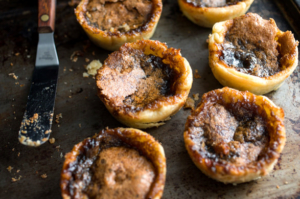
Do you have a favorite food at Thanksgiving? Dr. Kathleen has a recipe from the NYT Cooking for butter tarts to share. This is a classic Canadian treat (braces-friendly) that she grew up with:


INGREDIENTS FOR THE PASTRY

⦁ 1 ½ cup/191 grams all-purpose flour, more for dusting

⦁ Pinch of fine sea salt

⦁ ½ cup/113 grams cold unsalted butter or lard (103 grams), cubed

⦁ ¼ cup/60 milliliters ice water

⦁ 1 large egg yolk

⦁ 1 teaspoon white vinegar

FOR THE FILLING

⦁ ¼ cup/36 grams raisins (optional)

⦁ 1 cup/220 grams packed brown sugar, light or dark (see Note)

⦁ ½ teaspoon fine sea salt

⦁ ¼ cup/57 grams unsalted butter, softened

⦁ 1 teaspoon vanilla extract

⦁ 1 large egg

PREPARATION

⦁ Make the pastry: In a large mixing bowl, combine flour and salt. Using a pastry blender or your fingertips, rub butter or lard into flour until mixture is in pea-size pieces.

⦁ In a small bowl, mix water, egg yolk, and vinegar until well combined. Add liquid to the flour mixture, using a fork to combine. Add 1 tablespoon more water if it looks dry.

⦁ Knead dough several times by hand to bring it together and shape into a flat square. Wrap with plastic and refrigerate for at least 30 minutes.

⦁ Once chilled, roll out the dough into a 16-inch-by-12-inch (40.5 centimeters by 30.5 centimeters) rectangle about 1/8- to 1/4-inch (3 to 6 millimeters) thick. Flour the work surface and rolling pin as you work with the dough.

⦁ Use a circular 4-inch (10 centimeters) cookie cutter (or a clean 28-ounce/496 milliliter can) to cut 12 pieces. Reroll dough if needed to cut more circles, but try to cut as many pieces on the first pass. With your fingertips, press each circle into the cup of a standard muffin tin, so that the edge of the dough is flush with the pan. Refrigerate while you make the filling.

⦁ In a bowl, cover raisins with hot tap water to plump. Heat oven to 425 degrees F (220 degrees C).

⦁ Make the filling: In a bowl, mix brown sugar and salt, and then beat the butter into the sugar by hand until smooth. Add vanilla and egg and mix until combined. Do not use an electric mixer; it will add too much air to the filling.

⦁ Drain the raisins and place seven or eight raisins in each chilled tart shell.

⦁ Divide the filling evenly among the tart shells, filling each one about halfway. Place muffin tin on a baking sheet. Bake 13 to 15 minutes for a runnier tart and 17 to 19 minutes for a firmer one.

⦁ A few minutes after removing the tarts from the oven, run a knife or offset spatula around the edge of each tart to loosen. Let cool completely in the tin. To remove, run a butter knife or offset spatula around and under each tart to pop it out of the tin. Enjoy!

Have a safe and lovely Thanksgiving everyone! We look forward to seeing you in the office again soon! Dr. Kathleen, Dr. Ivy and Team

Top
Call to book your complimentary consultation
×
Contact Us!
call email